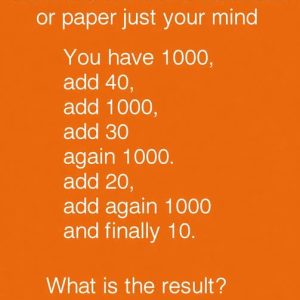
At first glance, a visual puzzle may look easy. You may be asked to find a hidden object, notice a tiny difference, or spot something that does not belong. But even after looking several times, the answer can remain surprisingly difficult to see. The reason is simple: seeing something does not always mean consciously noticing it.
This is linked to a psychological effect called **inattentional blindness**. It happens when your attention is focused on one thing and you fail to notice something unexpected. The brain takes in a huge amount of visual information every moment, so it must decide which details deserve attention. As the original article explains, **“Looking directly at an image does not mean we consciously process every detail within it.”**
Visual puzzles often use this limitation to make their challenges harder. An unusual detail may be placed near an edge, hidden among similar shapes, or blended into a repeating pattern. Your expectations can also affect what you notice. If you are searching for a color difference, you may completely miss a change in shape or position. Focusing too heavily on the center can also make details in the corners easier to overlook.
The good news is that struggling with these puzzles does not mean you have poor eyesight or low intelligence. These challenges are mainly designed for entertainment and to test how we direct our attention.
The next time you cannot solve a visual puzzle, change your approach. Look carefully around the edges, compare shapes and positions, and question what you expect to find. Sometimes the answer is not really hidden at all. It may have been visible from the beginning, simply waiting for your attention.