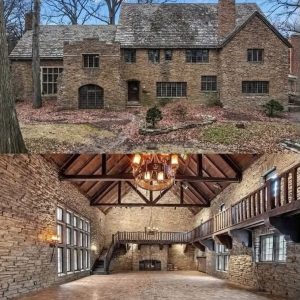
Some properties are memorable because of their size, while others stand out because of their architecture, location, or history. This historic underground estate combines several of those qualities, offering a home that is very different from a conventional residence. Instead of being built entirely above ground, parts of the property are integrated into the surrounding landscape, creating a private and unusual connection between the home and the land.
The underground design is one of its most distinctive features. Unlike a traditional house with large windows and open views, an underground or partially underground home can feel more sheltered and private. At the same time, the surrounding land can provide outdoor space for gardens, recreation, workshops, storage, or simply enjoying a quieter setting. A large fenced parcel can also create a greater sense of separation from neighboring properties.
Its historic character adds another layer of interest. Older properties often contain materials, layouts, and construction details that are difficult to reproduce today. For someone interested in restoration, the goal could be to improve modern comfort while preserving the features that make the estate unique. The challenge is finding a balance between improving the property and preserving the elements that give it character.
A property like this could also become a private retreat, family home, hobby space, or long term restoration project. However, an underground structure requires careful evaluation, especially for drainage, waterproofing, moisture, ventilation, electrical systems, plumbing, and structural condition. Professional inspections are important because some problems may not be obvious during a casual visit.
Ultimately, the estate’s appeal comes from its combination of unusual architecture, surrounding land, privacy, history, and potential. It may not suit someone looking for a standard modern home, but for a buyer who values character and enjoys creating something personal, its unconventional design could offer a rare opportunity. Unconventional spaces can be approached creatively, making the property a place that could evolve with its owner’s needs.