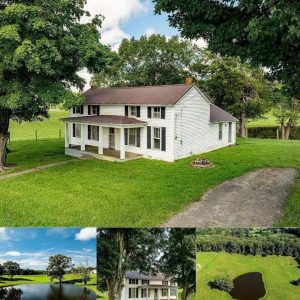
I never expected to discover a piece of land that would make me imagine an entirely different life. Hidden away from busy roads and crowded neighborhoods, the roughly seventy-five-acre property offered wooded areas, open fields, and plenty of privacy. Standing there, I understood the appeal of having so much space for walking trails, gardens, recreation, or eventually building a private home.
But as I explored, I realized the property would require more than simply buying beautiful countryside. An unusual feature appeared beyond the trees: a natural clearing with gently sloping ground and signs of seasonal water flow. It reminded me that not every part of the land would be suitable for construction. Some areas might be better left untouched for wildlife, recreation, or conservation, making professional surveys and careful planning essential.
I began looking into zoning, road access, electricity, water, wastewater, soil conditions, drainage, and possible environmental restrictions. Even building a private road could require permits, engineering, and ongoing maintenance. The dream of creating a secluded retreat was still possible, but I knew it had to begin with facts rather than imagination.
What excited me most was the flexibility. I imagined walking trails through the woods, fruit trees in open areas, and fields for recreation, while using only a small portion for a home. There was no reason to change everything at once. The land could develop slowly while much of its natural character remained intact.
Eventually, I realized the greatest attraction was not simply owning seventy-five acres. It was having the freedom to decide what the land could become while respecting its limitations. Large properties require work, but with realistic expectations and careful planning, that responsibility can become part of the experience. What first looked like empty countryside began to feel like a place full of possibilities waiting to be carefully shaped.