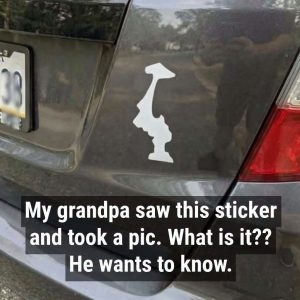
While driving through the Pacific Northwest, many notice a curious image: the outline of Washington displayed upside down. At first glance, it seems like a printing error, but repeated sightings show the design is deliberate. Over time, it has become “a playful emblem of regional pride, shared humor, and a quiet sense of belonging among residents.”
The trend gained traction in the early 2010s with the rise of minimalist state-outline decals nationwide. Washington’s rectangular shape made it recognizable, and flipping it “introduced a subtle but clever twist.” What began as a lighthearted choice evolved into a cultural signature—understated and personal rather than flashy or touristy.
Outdoor enthusiasts were among the first to adopt the look. Hikers, cyclists, students, and longtime locals embraced it as a badge of connection to the region’s natural beauty. The decal became common on gear and vehicles belonging to people who spend weekends exploring forests, coastlines, and mountain trails. Its simplicity mirrored the Pacific Northwest’s aesthetic—minimal, thoughtful, and quietly expressive.
Several explanations circulate about why the state is flipped. One humorous theory jokes that Washington’s famously rainy weather caused the state to turn over. Others appreciate its subtlety, seeing it as “a modest way to signal pride without being loud.” Some even note the inverted shape resembles a mountain peak, a nod to landmarks like Mount Rainier and surrounding ranges.
Whatever the reason, the upside-down design sparks conversation while remaining understated. It invites curiosity without demanding attention.
Today, the flipped Washington outline represents more than decoration. For many, especially those who move away, it serves as a small reminder of evergreen forests, ferry crossings on Puget Sound, and misty coastal mornings—a quiet declaration of home.