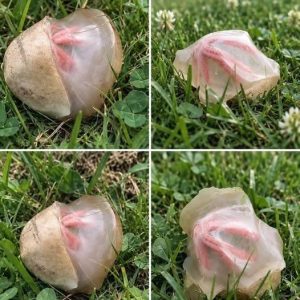
One ordinary grocery trip turned into an unexpected family mystery. What seemed like a normal ham looked alarming after it was sliced. **”One slice of ham changed everything.”** A strange, dense mass appeared in the center, and everyone around the kitchen table immediately lost their appetite. Instead of enjoying dinner, the family began wondering what they had found.
The unusual spot sparked all kinds of fears. Some thought it could be contamination, while others worried about parasites or a serious problem during production. **”We argued, we guessed, we worried…”** The kitchen quickly shifted from a comfortable place to one filled with uncertainty as everyone examined the meat and searched for answers.
Rather than throwing the ham away without knowing the truth, they looked online, compared photos, and read food safety information. After some research, they finally discovered that the strange center was completely harmless. **”It was just a harmless concentration of salt, fat, and proteins formed during curing.”** The odd-looking mass was simply a natural result of the curing process and not a sign of disease or spoiled meat.
The explanation brought immediate relief. **”No hidden disease, no sinister secret—just an ugly but natural quirk of processed meat.”** Although the appearance was unsettling, it did not mean the ham was unsafe to eat. Sometimes food develops unusual features during processing that look much worse than they actually are.
The experience left the family with a simple but valuable lesson. Seeing something unexpected can make the imagination jump to the worst possible conclusion, especially when it involves food. In this case, fear grew much faster than the facts. Taking the time to research the issue instead of assuming the worst helped replace panic with understanding, proving that appearances can be misleading and that not every strange-looking discovery is a real danger.